
Pump action: the piston classic
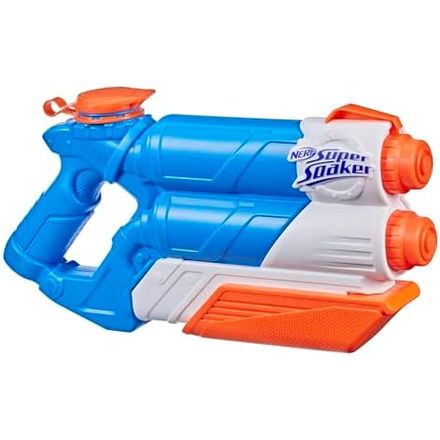
Most Super Soaker water guns in our range use a piston pump. Under the barrel sits a cylinder with a plunger connected to the handle. Pull the handle back and water is drawn from the tank into the cylinder through a one-way valve; push it forward and that water is forced out of the nozzle. Every stroke is one shot, so the stream lasts exactly as long as you keep pumping.
The beauty of the pump is how simple it is. There is nothing to charge and very little to break, and the nozzle decides the shape of the shot. Twin Tide splits it into two barrels, Twister spins two streams into a double helix, Wave Spray rocks the nozzle up and down, and Hydro Frenzy slides between three patterns. Barrage adds a dial for scatter, flood and distance.
Plunger: load from the pool
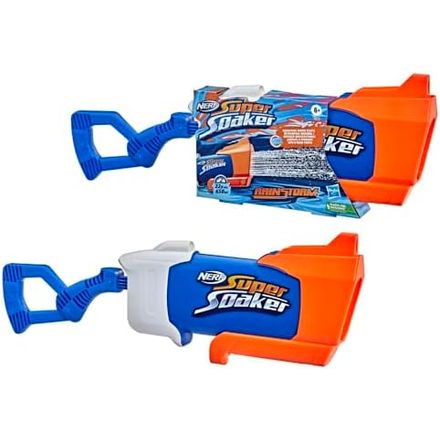
A plunger blaster works like a big syringe. Instead of a separate tank, the barrel itself is the chamber. Dip the front end into water, draw the handle back and the chamber fills; push it forward and the whole load leaves at once. Torrent holds 8 oz, Rainstorm 22 oz and each Rainstorm Riot 650 ml.
Because the shot is a single heavy flood rather than a long stream, plungers are close-range specialists. They are at their best in and around a pool, where reloading takes one stroke and you never have to leave the water.
Air pressure: store it, then release it
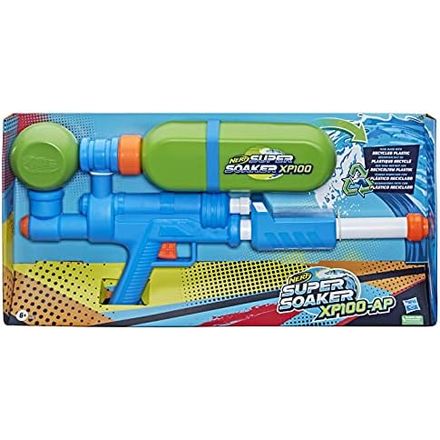
This is the system that made the original Super Soaker famous. Pumping does not push water out directly; it pushes air into a sealed pressure chamber. When you pull the trigger, a valve opens and the compressed air drives the water out in a continuous stream that keeps going until the pressure runs out.
Our XP50-AP and XP100 bring this classic system back with retro colors and a removable tank. A relief valve lets air escape if someone over-pumps, which keeps the pressure within a safe limit for young players. Squall Surge uses a similar pump-pressurized idea in a mid-size body.
Hose pressure: let the tap do the work
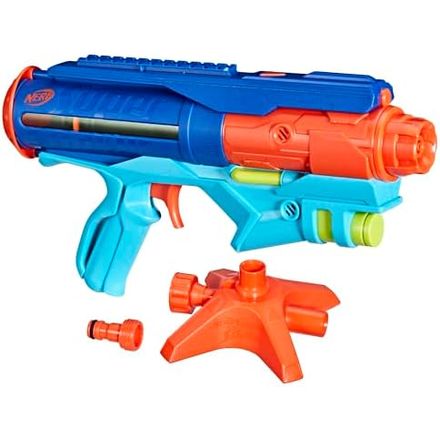
Power Drench and Power Drench XL skip pumping entirely. Their fill station connects to the garden hose. Set the blaster on the station and household water pressure fills the tank and pressurizes it at the same time. Pull the trigger for powerful pulse bursts — and with the XL, choose to release the entire tank in a single flood.
The only requirement is enough pressure at the tap: at least 27 psi for Power Drench and 35 psi for the XL. Hose blasters like Hydroburst and Quadblast go one step further and stay connected while you play, so the water simply never runs out.
Dunk-Fill: the one-second refill
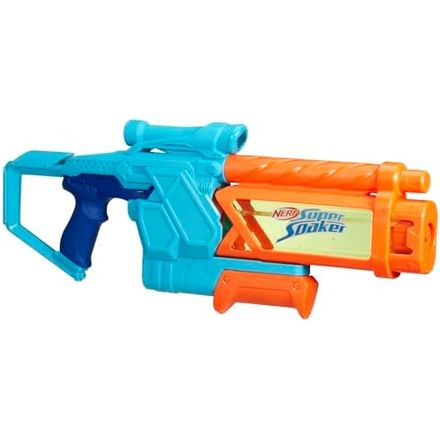
Dunk-Fill is about refilling rather than firing. The tank has a self-sealing valve instead of a cap. Push it under the surface with the printed arrows pointing down, and water rushes in; lift it out and the valve closes. The translucent tank shows how full you are.
Mini and Dunk-Fill+ fire on a trigger, while the 2-Pack and Mega Dunk-Fill use pump action. Whatever the firing system, the refill takes about a second — which is why Dunk-Fill blasters dominate pool parties.
Where the Super Soaker came from
The Super Soaker was created by engineer Lonnie Johnson, who built his first pressurized water gun prototype in the 1980s. Larami brought it to stores in 1990, the Super Soaker name followed in 1991, and Hasbro later took the brand into the Nerf family. The classic air-pressure system from those years is what our XP series revives today.
Why there is no motorized Super Soaker in our current range
Motorized water guns have appeared in the past, but every blaster in today's lineup is manual or hose-powered. A pump, a plunger or the pressure from your tap does all the work, so there are no batteries to charge, nothing electrical near the pool, and the blaster is ready the moment it holds water.
Super Soaker vs. a foam dart blaster
A dart blaster stores energy in a spring or a flywheel and throws a foam dart. A Super Soaker throws water, which means no ammunition to collect and a soaking effect that a dart can never match. Most families keep both: dart blasters for indoor and cool days, water blasters for hot summer afternoons.
Which system should you choose?
For younger kids, trigger-fired Dunk-Fill blasters and small pump blasters are easiest. For long backyard battles, pick a big pump tank like Barrage or an air-pressure XP. For the most powerful shot in the current range, choose Power Drench XL. And if you never want to refill at all, hook a hose blaster to the tap or climb onto a pool float with a built-in blaster.